
How to Polish Your Car's Headlights for Better Safety
It is necessary to polish the headlights when they turn yellow or become dim, preventing the light from the headlights from leaking.
All cars are equipped with lighting and signaling devices. The optical groups front and rear (more commonly known as 'lights') are very important for safe driving. In fact, they make the vehicle more visible in conditions of poor or no visibility (signaling its presence to other motorists) and illuminate the road, facilitating the identification of other road users. The passage of time, and constant exposure to sunlight and atmospheric agents, tends to dull the transparent plastic covers that protect the projectors.
Therefore, it is good to know how to polish your car's headlights with as much precision as possible, so that the beam of light produced by the headlights is as powerful and effective as possible.
How to polish a car's headlights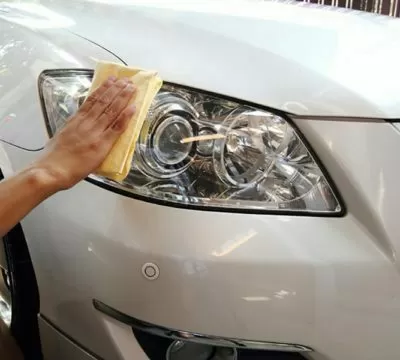
The polishing of car headlights can vary depending on the type of material used for the covers that protect the headlights.
In fact, starting from the 1990s, polycarbonate headlights became widespread, a material that is easier to work with (and less expensive) but tends to become cloudy over time. This, of course, is not just an aesthetic damage but, more importantly, also represents a safety contraindication, as cloudy headlights are not perfectly transparent.
That said, let's first see how to polish polycarbonate headlights. If the headlight cover is seriously compromised – and therefore it is no longer possible to restore it to its original state due to the presence of cracks or fractures – it is advisable to proceed directly with the replacement of the headlights, entrusting the task to a specialist workshop. In the case that, on the contrary, the headlights are not irreparably altered from the original scenario, one can opt for polishing, even with DIY. For this, special kits are available on the market, which include cleaning products. (which allow the removal of the superficial part of the cloudy or yellowed covers and restore their transparency), cloths or abrasive papers, polishing products, and protectants (pastas or creams).
The first step is to clean the surface of the headlight, wash the whole car or simply clean the casing with a specific glass cleaner. This way, dirt residues (or even traces of insects) are removed; it is also advisable to carefully clean the part of the body surrounding the headlight, as it will later be covered with masking tape. This precaution is necessary to avoid scratching the parts around the casing.
Headlight polishing kits include three abrasive papers, different from each other by the thickness of the grain. The sheets should be moistened with water or a glass cleaner and used with a velcro backing; one must rub the surface of the headlight from top to bottom, being careful not to apply excessive pressure. The result of this first polishing step will be a fine layer of white dust, or the polycarbonate removed from the sandpaper. The result of this first treatment will be a cloudy surface: this is normal but the result should be homogeneous.
The same operation should be repeated using the 'medium' sandpaper and, finally, with the 'finest', that is, with the finest grain. The final phase of the treatment consists of polishing with the polish, which will be applied directly to the shell with a microfiber cloth, applying more vigorous pressure during the application of the product. In this circumstance, the advice is to work on a small area at a time, patiently working on each part of the cover. Finally, to preserve the result obtained, a sealing product should be applied, which is gently rubbed with a microfiber cloth.
How to polish plastic headlights with abrasive paste
There are other techniques to perform a thorough polishing of your car's headlights. One of the most common consists of polishing the headlights with abrasive paste, following a procedure very similar to that described above for polishing polycarbonate covers.
First, the superficial layer of cloudy or yellowed plastic must be removed. To do this, you can use abrasive paper or an abrasive disc mounted on an electric polisher. The paste for treating the headlights is commonly referred to as 'headlight renewer' and is usually included in complete polishing kits with abrasive discs and polish (all costs generally range between 20 and 30 euros). Even in this case, at the end of the treatment, it is necessary to apply a protective shine spray.
How to polish headlights with toothpaste
Among the more artisanal methods for restoring the transparency of headlight covers is the use of toothpaste. The principle is very simple: use this instead of abrasive paste, rubbing it with a microfiber cloth on the clean surface. The general procedure and precautions are the same: clean the headlight, rub the surface with the 'abrasive' product, clean everything, and apply a polishing and protective product.
``````html /p>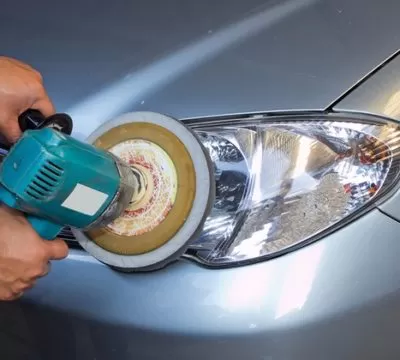
Have your headlights polished at the workshop
If you don't have the time or means to dedicate to DIY headlight polishing, you can contact a workshop that offers this type of service. The cost of a professional intervention ranges from 50 to 100 euros: although it may seem like a high figure for light maintenance, just think that the brightness of the headlights is one of the parameters considered during the periodic inspection of the car.
Choosing a professional polisher has advantages and disadvantages. On one hand, there is the certainty of a perfect and lasting result; on the other hand, the financial outlay is greater and the time required for the intervention can be quite prolonged. By opting for DIY, there are no time limitations and, in general, the expense is lower (even if you buy a polishing kit to use multiple times) but the final result may be more approximate.
```