
Common Mistakes When Changing Engine Oil
As the pace of life has increased and engine technology has become more complicated, most people now pay a professional to take care of vehicle maintenance. But whether you are looking to change your engine oil for the first time, or if you are an experienced user who may have changed oil hundreds of times, it never hurts to receive reminders of the mistakes you might make when performing an engine oil change.
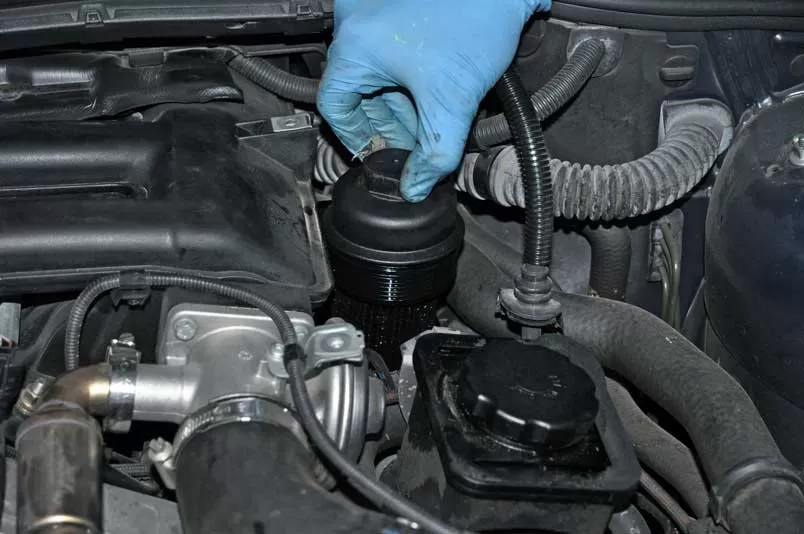
Below we will present a list of mistakes you should avoid the next time you change your own oil.
1) Installing the wrong oil
By "wrong oil," I mean the wrong viscosity. Engines vary, as do their motor oil requirements. If your Ford F-150 needs 5W-20 oil, then do not use 10W-40.
Using diesel oil in gasoline engines, or vice versa, is another potential risk. However, you can use diesel in your gas engine if it meets the appropriate specifications, as we explain here.
A third way to go wrong is to use anything other than a high-quality synthetic oil. This is our opinion, but if you have a mechanically sound engine and care about your vehicle, you should use synthetic motor oil.
2) Forgot to replace the oil fill cap
It happens to everyone; you're pleased with the work done, but the car is overheating. If you forget to reinstall the oil fill cap, a complicated situation can arise.
If you leave without the cap, hot oil will spill and splash all over the engine compartment, and you'll have to get your hands dirty again to clean it up, in addition to having to get more oil, and possibly a new cap.
3) Filling below or above the oil level in the compressor sump
Know how much oil your vehicle takes and make sure to have enough on hand. Our handy Product Guide often provides that information.
If after changing the oil your engine makes a "strange" noise, and your engine sounds hollow, you probably haven't filled it up to the proper oil level.
After changing the oil, run the car for a few minutes to circulate the oil, turn it off for a few minutes, and check the oil level one last time.
4) Removing the threads from the drain plug
Another common mistake we see people make is forgetting to reinstall the drain plug after completing the job.
Fortunately, if you are changing the oil in your garage or in your driveway, you will quickly notice by the dripping sound near your feet that you missed this step.
But there is a more serious mistake you can make with the plug. If you are not careful when reinstalling it, you may end up cross-threading or mis-threading the plug. Although it may not seem like the end of the world, this could result in a slow leak and a not-so-easy repair, so be careful when putting the drain plug back on.
When removing the old filter, make sure the O-ring comes off with the filter
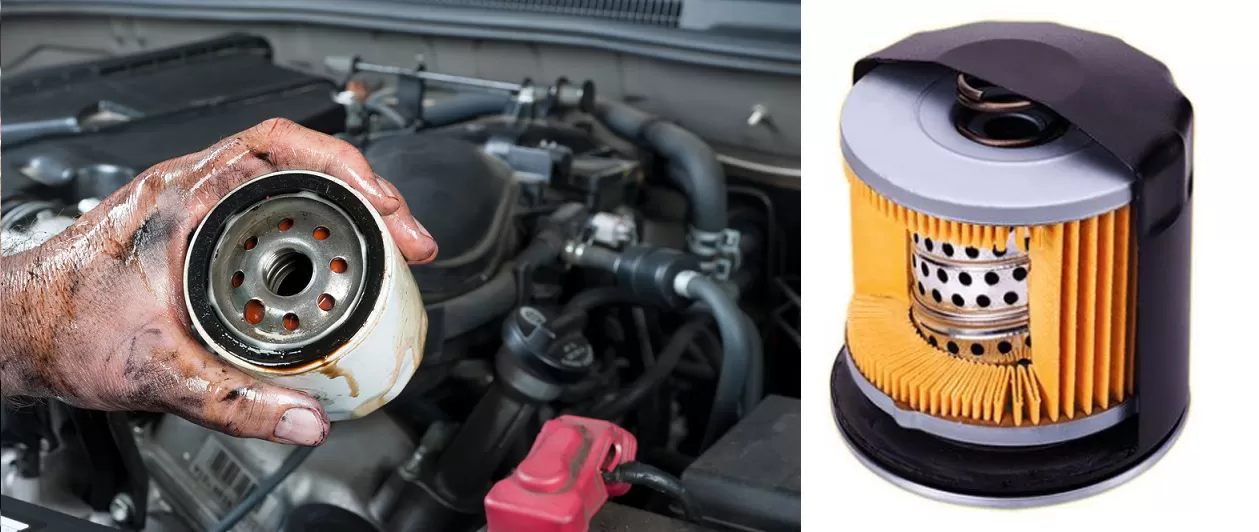
5) Remove the O-ring
The time to perform an engine oil filter change is when you are changing the oil. There are three things you should know about changing the oil filter.
First, when you remove the filter, make sure the O-ring comes off with it. There will be a new O-ring on the new filter that you are supposed to use. You do not want to put the new filter on and have two O-rings there.
Second, before screwing on the new filter, moisten the O-ring with a fingertip of oil. Do not put the filter on dry. Lubricating the O-ring helps the filter and engine connect better, and helps you remove the filter more easily during your next oil change.
Finally, do not over-tighten. You only need to tighten the filter by hand. Make it snug, but do not overdo it.
That's it! Changing your own oil can provide great satisfaction in a job well done... as long as you do not make any of the aforementioned mistakes.
```