
Car Batteries: Everything You Need to Know
Everything You Need to Know About Car Batteries
Sooner or later, all motorists experience the inability to start their car due to a dead battery: but why does this happen and, above all, what is it and how does this indispensable part of our car work?
In this article, you will find everything you need to know about the car battery: what it is, how it works, why it discharges, and how to act.
Car Battery: What It Is and How It Works.
Car batteries are devices for storing electrical energy (which is produced through a chemical process) and function in every way like a regular battery: the main part consists of two electrodes, one positive and one negative, immersed in an electrolyte (a substance that, in solution, splits into ions).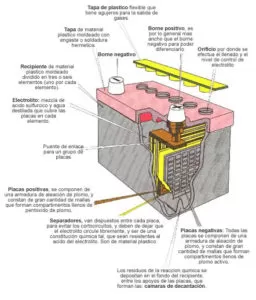
Their purpose is to store electrical energy and release it in the form of direct current: in our cars, the battery's function is to allow the starter motor to start with a small discharge and keep the electrical system active.
These batteries, which are usually made up of lead electrodes submerged in diluted sulfuric acid, are called secondary, meaning they can be recharged (fortunately for us) once the charge is depleted.
When the battery is in operation, a current develops between the electrodes, which over time changes its chemical composition, converting lead into lead sulfate: the latter will eventually cover the negative electrode with a white patina. This phenomenon, called sulfation, can ultimately render them useless.
Fortunately, car batteries discharge briefly for a few seconds to allow the starter motor to start, and then recharge automatically while the car is running, through the dynamo they are connected to. Therefore, in theory, the sulfation process could be avoided, if it weren't for the fact that we often adopt incorrect behaviors, such as keeping the electrical system on for too long while the car is not running.
Batteries are often damaged by another phenomenon, called self-discharge: in practice, the level of the electrolyte liquid is too low (often due to evaporation), which promotes oxidation and deterioration of the conductors due to a higher concentration of acid. Often, in these cases, short circuits occur that make them unusable.
But what should we do when we can't start again due to a dead battery? We'll see!
How to Recharge the Car Battery?
As we mentioned earlier, most of the time, fortunately, we can recharge the battery: it will be enough to pass it through an electric current from an external source, a process that will trigger a reverse chemical reaction, returning lead sulfate to its original state.
However, during the recharging process, electricity breaks down the water contained in the electrolyte into hydrogen and oxygen, which will be released as gas: for this reason, it is important to frequently check the liquid level in the battery to avoid the self-discharge process we have already mentioned.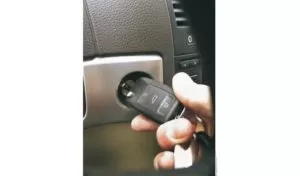
There are many factors that influence the life of the car battery, some of which are independent of our behavior, but it is certainly a good habit to check it periodically.
But what should we do if, despite all precautions, our battery suddenly fails? When the battery is completely discharged, it cannot provide even that small spark needed to start the starter motor: the only solution in these cases is to provide a minimum charge, taking it from another battery.
In fact, by connecting it with specific cables to the battery of another running car, ours will be able to acquire the minimum charge necessary to start the engine.

This is all you need to do:
First, connect the red cable, with the clamps on the positive terminals, first to the dead battery and then to the charged one.
Connect the black cable to the negative terminals, also in this case first to the dead battery and then to the charged one.
Give the running car a few throttle hits and wait about ten minutes.
Once you have managed to start the car, disconnect the cables and get going, remembering to keep the high revs for at least another 10 minutes, to allow the battery to recharge sufficiently.